
close
Choose Your Site
Global
Social Media

Author: Site Editor Publish Time: 2026-04-05 Origin: Site


Choosing the right Duplex Stainless Steel Pipe for chloride environments is not simply a matter of selecting a stronger alloy or a more expensive material. In real projects, chloride exposure can come from seawater, coastal air, desalination systems, chemical processing lines, cooling water circuits, brine solutions, and even cleaning media used in industrial plants. Each of these environments creates a different balance of corrosion risk, mechanical stress, temperature load, and cost pressure. That is why grade selection should be based on service conditions rather than assumptions. A pipe that performs well in one chloride-containing process may fail early in another if pitting resistance, crevice corrosion resistance, weldability, or stress corrosion performance has not been evaluated carefully. For engineers, buyers, and project owners, understanding how duplex grades differ is the key to longer service life and more stable operating costs.
In chloride service, the value of duplex stainless steel lies in its combination of austenitic and ferritic microstructures. This dual-phase structure gives it higher strength than many conventional stainless steels while also improving resistance to localized corrosion and chloride stress corrosion cracking. However, not all duplex grades behave the same way. Lean duplex, standard duplex, super duplex, and higher alloyed variants each serve different operating windows. The best choice depends on chloride concentration, temperature, flow conditions, welding requirements, and lifecycle budget. This article explains how to choose the best grade with a practical, decision-oriented approach.
Chloride ions are especially aggressive to stainless steel because they can break down the passive oxide film that protects the metal surface. Once that film is damaged, localized corrosion may start quickly, especially in stagnant areas, gasket zones, deposits, crevices, and weld-affected regions.
In chloride-rich systems, the main risks usually include:
· Pitting corrosion
· Crevice corrosion
· Chloride stress corrosion cracking
· Erosion-corrosion under high flow
· Localized attack in weld zones
The challenge is that visible surface condition alone is not enough to predict performance. A pipe may look acceptable during installation but still experience rapid localized attack after months of exposure if the selected grade lacks sufficient alloy content.
Different duplex stainless steel grades are designed for different corrosion and strength requirements. In general, the higher the alloy content of chromium, molybdenum, and nitrogen, the better the resistance to chloride attack.
Lean duplex grades are designed to offer improved strength and useful corrosion resistance at a more economical cost. They are often selected when chloride exposure is moderate and budget control is important.
Typical applications include:
· Water treatment
· Structural tubing
· Mild industrial piping
· Systems where chloride levels are present but not extreme
Standard duplex grades, such as 2205, are widely used because they provide a strong balance of corrosion resistance, mechanical strength, and fabrication performance. They are often the first serious option considered for demanding chloride service.
Typical applications include:
· Chemical processing
· Offshore equipment
· Heat exchangers
· Industrial process piping
Super duplex grades are used when chloride exposure is severe, especially in warm seawater, aggressive brines, and highly corrosive process streams. They are chosen when standard duplex may no longer provide enough safety margin.
Typical applications include:
· Seawater systems
· Desalination plants
· Marine piping
· Offshore oil and gas platforms
The table below offers a simplified view to help understand how duplex grade families differ in chloride environments.
Grade Family | Typical Corrosion Resistance | Strength Level | Relative Cost | Best Fit for Chloride Environments |
Lean Duplex | Moderate | High | Lower | Mild to moderate chloride exposure |
Standard Duplex 2205 | High | High | Medium | Broad industrial chloride service |
Super Duplex 2507 | Very High | Very High | Higher | Severe chloride and seawater service |
This comparison is only a starting point. Final grade selection should also consider temperature, fabrication method, flow velocity, and maintenance expectations.
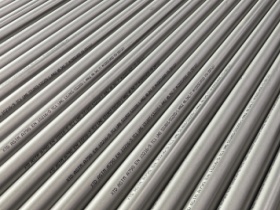
Choosing the best Duplex Stainless Steel Pipe grade becomes easier when the decision is broken into a few critical questions.
The first step is understanding the actual chloride load in the system. Low to moderate chloride levels may allow the use of lean duplex or standard duplex, depending on temperature and operating stability. High chloride concentrations, especially in brine or seawater service, usually require standard duplex at minimum and often super duplex for a more reliable margin.
It is important not to judge only by the source of the water. For example, recycled water, evaporative systems, and concentration cycles can raise chloride levels well above the original feedwater condition.
Temperature has a major effect on corrosion behavior. A grade that performs well at ambient conditions may become much more vulnerable when temperature rises. In chloride environments, localized corrosion and stress corrosion risk often increase significantly with heat.
This means:
· Low-temperature chloride service may allow a broader grade choice
· Warm chloride service narrows the safe grade window
· Hot chloride service usually pushes the decision toward higher-alloy duplex grades
If temperature fluctuates, the highest operating point should be evaluated, not just the average.
Even a high-quality alloy can struggle if process design creates stagnant zones. Chloride attack often starts where oxygen availability changes and deposits collect. Dead legs, flange gaps, threaded areas, and poorly drained sections increase the risk of crevice corrosion.
If the system design includes these features, the selected grade should provide extra corrosion margin. In many cases, upgrading from lean duplex to 2205, or from 2205 to super duplex, is justified not because the bulk fluid is more corrosive, but because the geometry is less forgiving.
Welding quality strongly affects the performance of duplex stainless steel. Heat input, cooling rate, filler metal selection, and post-weld cleanliness all influence phase balance and corrosion resistance. If the project involves extensive field welding, the material choice must reflect the practical fabrication conditions.
A grade with excellent laboratory corrosion resistance may still underperform if welding procedures are poorly controlled. For that reason, buyers should assess not only the base material grade, but also:
· Weld procedure qualification
· Filler compatibility
· Pickling and passivation practices
· Supplier manufacturing consistency
One commonly used indicator in duplex material selection is the Pitting Resistance Equivalent Number, often called PREN. It estimates resistance to pitting corrosion based on key alloying elements such as chromium, molybdenum, and nitrogen.
In general terms:
· Lean duplex has a lower PREN
· Standard duplex 2205 has a higher PREN
· Super duplex 2507 has an even higher PREN
A higher PREN usually means stronger resistance to chloride-induced pitting, but PREN should not be used alone. Real service performance still depends on fabrication quality, fluid chemistry, deposits, oxygen content, and operating temperature. PREN is useful for comparison, not as a complete design rule.
The right Duplex Stainless Steel Pipe grade for chloride environments is the one that matches the real corrosion demands of the system, the fabrication capability of the project, and the long-term reliability target of the owner. Lean duplex may be suitable for mild chloride conditions where cost discipline is important. Standard duplex 2205 is often the most balanced choice for many industrial applications. Super duplex becomes the stronger candidate where chloride concentration, temperature, or seawater exposure makes the environment significantly more aggressive. In our experience as a manufacturer-focused industry participant, the most successful projects are usually those that select material based on total service conditions rather than on a single data point. When buyers, engineers, and suppliers evaluate grade, process, and fabrication together, the result is a pipe system that performs more consistently and lasts longer. For readers who want to explore grade selection, manufacturing details, or application-specific options in more depth, we recommend learning more from Zhejiang Xintongda Special Steel Manufacturing Co., Ltd. We believe technical discussion should begin with the service environment first, and if needed, readers may also contact this company for more practical information about duplex stainless steel solutions.
Yes, in many chloride environments duplex stainless steel pipe performs better because it offers higher resistance to pitting, crevice corrosion, and chloride stress corrosion cracking than common 304 or 316 grades.
Standard duplex 2205 is one of the most commonly used grades because it provides a strong combination of corrosion resistance, strength, availability, and cost efficiency.
Not always. A higher alloy grade can improve corrosion resistance, but the best value comes from matching the grade to the actual service conditions rather than selecting the most expensive option by default.
Welding affects phase balance and corrosion resistance. Even the correct grade may perform poorly if welding procedures, filler materials, and surface finishing are not properly controlled.
