
close
Choose Your Site
Global
Social Media

Author: Site Editor Publish Time: 2026-04-16 Origin: Site


Offshore engineering leaves very little room for material failure. Piping systems on platforms, floating units, subsea installations, and coastal process facilities must operate under continuous exposure to saltwater, humidity, chlorides, temperature fluctuations, and chemically aggressive media. In these conditions, choosing the right pipe material is not simply a design decision; it is a long-term reliability strategy. This is why Monel Alloy Steel Pipe continues to attract attention in marine and offshore sectors. Although the term includes “steel” in many market searches, Monel is more accurately known as a nickel-copper alloy material valued for excellent corrosion resistance. For operators, fabricators, and procurement teams working in highly corrosive offshore environments, Monel pipe is often preferred because it combines durability, strength, and stable performance where many conventional materials show limitations over time.
Offshore environments expose metal components to multiple forms of attack at the same time. It is not just seawater that causes concern. The real challenge often comes from the interaction of salt spray, oxygen, stagnant moisture, crevice zones, process chemicals, and mechanical stress.
Common offshore corrosion risks include:
· general surface corrosion from marine exposure
· pitting caused by chloride-rich conditions
· crevice corrosion in flange and joint areas
· galvanic corrosion when dissimilar metals are present
· stress-related degradation in demanding service conditions
A pipe material that performs well in a dry industrial plant may not deliver the same service life offshore. This is exactly where Monel becomes a preferred option.
Monel alloys are primarily nickel-copper based and are widely recognized for their strong resistance to seawater and many corrosive media. In offshore systems, this composition offers a distinct advantage because it remains stable under prolonged marine exposure.
The nickel content contributes to broad corrosion resistance, while copper improves performance in marine and saltwater conditions. Together, they create a material that is highly suitable for equipment exposed to flowing seawater, brine, and saline atmospheric conditions.
Monel pipe is not chosen only because it resists corrosion. It is also selected because it maintains good mechanical integrity. In many offshore applications, engineers need a material that can withstand pressure, vibration, installation stresses, and changing operating conditions without becoming a maintenance burden.
Seawater is one of the most aggressive natural environments for metal systems. Stainless steels may perform adequately in some marine settings, but in chloride-heavy offshore service, certain grades may become vulnerable to localized corrosion if conditions are severe enough.
Monel has built a strong reputation in seawater applications for several reasons:
· It resists corrosion in rapidly flowing seawater better than many conventional materials.
· It performs well in marine atmospheres with constant salt deposition.
· It is less likely to suffer the same degree of pitting or crevice attack seen in less suitable alloys under comparable conditions.
· It remains dependable in systems that are difficult or expensive to access for frequent maintenance.
For offshore operators, that combination matters. Downtime at sea is expensive, inspection windows are limited, and replacement logistics are far more complex than they are onshore.
When people ask why Monel Alloy Steel Pipe is preferred for corrosive offshore environments, the answer is usually not based on one single property. It is the combination of performance features that makes the difference.
This is the most obvious advantage. Monel is widely used where pipes face saltwater, brine, and marine exposure on a continuous basis. In such settings, corrosion resistance directly affects safety, operating continuity, and lifecycle cost.
Offshore piping must survive more than chemistry. It must also deal with vibration, fluid movement, pressure changes, and installation strain. Monel offers a balance of corrosion protection and mechanical stability that supports long-term service.
Every maintenance event offshore means labor planning, access equipment, possible shutdowns, and added risk. A more durable material can reduce inspection frequency, repair needs, and replacement costs over time.
While the initial material cost may be higher than that of some alternatives, decision-makers often prefer Monel when total ownership cost and service predictability matter more than the lowest purchase price.
The table below shows why Monel is often shortlisted for offshore use when corrosion risk is high.
Material Option | Seawater Corrosion Resistance | Chloride Resistance | Mechanical Reliability Offshore | Typical Maintenance Burden |
Monel Alloy Steel Pipe | Excellent | Excellent | High | Low to Moderate |
316/316L Stainless Steel | Moderate to Good | Moderate | Good | Moderate |
Carbon Steel | Low without protection | Low | Moderate | High |
Duplex Stainless Steel | Good to Very Good | Good | High | Moderate |
This table is a simplified comparison, but it reflects the core reason many offshore engineers favor Monel in particularly aggressive marine service.
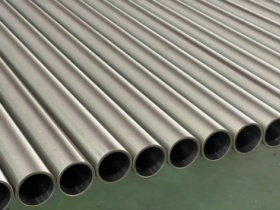
Monel is not limited to one niche. It appears in a range of offshore and marine systems where material failure would create operational and safety problems.
On offshore platforms, topside systems face continuous salt-laden air, moisture, and process exposure. Monel may be used for selected piping runs, instrument lines, and components where corrosion resistance is especially important.
Any system carrying seawater, cooling water, or saline process streams places heavy demands on internal pipe surfaces. Monel is often considered for these duties because of its established resistance in marine media.
Offshore facilities frequently use cooling and heat transfer systems in aggressive environments. In associated piping and connector sections, corrosion-resistant alloys help prevent leakage and unexpected service interruptions.
In some projects, Monel pipe is selected alongside compatible valves, flanges, and fittings to reduce the risk of mixed-material corrosion problems in critical service zones.
Procurement teams understandably focus on budget. However, offshore material selection should rarely be based on initial cost alone. A lower-cost pipe that fails early can become far more expensive once replacement logistics, lost production, labor, and safety exposure are included.
A practical offshore evaluation often considers:
· initial material and fabrication cost
· expected service life
· inspection and replacement frequency
· shutdown risk
· maintenance accessibility
· consequences of leakage or failure
In this broader calculation, Monel often proves attractive because it supports reliability in places where intervention is costly. For offshore operators, predictability is often worth paying for.
Not every offshore environment is identical. Some systems deal mainly with atmospheric exposure, while others face direct seawater contact, high salinity, acidic media, elevated temperatures, or erosion-related wear. That is why engineers should not specify material by habit alone.
Before choosing Monel Alloy Steel Pipe, teams typically assess:
· fluid composition
· temperature and pressure range
· flow velocity
· chloride concentration
· risk of crevice formation
· compatibility with other system metals
· welding and fabrication requirements
The more demanding the service conditions, the more important specialized alloy selection becomes. In highly corrosive offshore environments, Monel is often preferred precisely because it offers a dependable answer to multiple risk factors at once.
At Zhejiang Xintongda Special Steel Manufacturing Co., Ltd., we understand that offshore customers are not simply buying pipe; they are choosing long-term operating confidence. In our experience, when clients ask about materials for corrosive offshore environments, the discussion quickly moves beyond price and toward durability, consistency, and service reliability. That is where Monel Alloy Steel Pipe stands out. It offers a practical answer for projects where seawater exposure, chloride attack, and difficult maintenance conditions make ordinary options less attractive. We believe the right material choice should support safer operations and more predictable lifecycle performance. For companies evaluating offshore piping solutions, learning more about suitable Monel pipe specifications, manufacturing quality, and application matching is often the most useful next step. Readers who want to explore these details further may contact Zhejiang Xintongda Special Steel Manufacturing Co., Ltd. for more technical information and product support based on actual service requirements.
Carbon steel usually needs heavy protective measures in marine environments and still faces a higher corrosion risk over time. Monel offers far better inherent resistance to seawater and salt-laden atmospheres, which helps reduce maintenance and replacement pressure.
Yes, Monel is widely valued for seawater-related applications because of its strong resistance to marine corrosion. That is one of the main reasons it is preferred in corrosive offshore environments.
In many offshore projects, yes. The initial material cost may be higher, but fewer corrosion issues, lower maintenance frequency, and longer service reliability can improve total value over the full operating life.
Buyers should confirm the required alloy grade, pipe dimensions, operating conditions, manufacturing standards, testing requirements, and compatibility with the rest of the system. Supplier quality control and traceability are also very important for offshore applications.
