
close
Choose Your Site
Global
Social Media

Author: Site Editor Publish Time: 2026-04-03 Origin: Site


When engineers and buyers talk about harsh environments, they are rarely talking about one single problem. In real projects, failure usually comes from a combination of factors such as chlorides, stagnant crevices, thermal cycling, welding heat tint, process contamination, and long operating hours under pressure. That is why selecting Austenitic Stainless Steel Pipes is never just a matter of choosing the most familiar grade. Austenitic stainless steels remain the most widely used family because they combine corrosion resistance with excellent formability and weldability, and they also retain strong ductility and toughness even at very low temperatures. But in aggressive service, the familiar answer is not always the right one. A pipeline that performs well in a clean indoor process may fail much earlier in coastal air, hot chloride-bearing water, or a welded system with poor post-fabrication cleaning. The right choice begins with understanding the environment first, then matching the grade, surface condition, and fabrication route to that reality.
A harsh environment is not defined only by acidity or temperature. In practice, stainless pipe is often challenged by localized corrosion, especially pitting and crevice attack, because these forms of corrosion develop in small zones where oxygen, chlorides, deposits, or process residues concentrate. Marine atmospheres, splash zones, chemical processing, pulp and paper systems, and poorly drained process lines all create these conditions in different ways. Chlorides carried by sea spray, de-icing salts, or industrial emissions are especially important because they are a major driver of atmospheric corrosion and can also promote localized attack in wet service.
This is why “stainless” should never be treated as a guarantee. A grade that is fully acceptable in a mild environment may be under-specified in a plant where chlorides, deposits, and temperature interact. In demanding cases, the corrosion limit is influenced not only by alloy chemistry, but also by weld defects, oxide from welding, contamination from carbon steel particles, pH, chlorination, microbial activity, and whether the design contains unavoidable crevices.
In our experience, the most reliable way to select Austenitic Stainless Steel Pipes is to build a short service profile before discussing price or availability. That profile should include process temperature, chloride level, pH, whether the line is continuously wet or intermittently wet, whether crevices are unavoidable, whether the system will be welded on site, and whether deposits or cleaning chemicals will be present. Once those answers are clear, grade selection becomes much more rational.
For example, standard 304L is an all-purpose austenitic stainless steel with good corrosion resistance, formability, and weldability, making it suitable for a wide range of general applications. 316L adds molybdenum and is widely used when corrosion resistance requirements are higher than average, particularly in more aggressive process environments. Low-carbon variants such as 304L and 316L are preferred where welding is involved because the lower carbon level reduces carbide precipitation and improves resistance to intergranular corrosion after heat input.
The table below is a simplified selection aid. It is not a substitute for project-specific corrosion testing or code review, but it helps frame where common austenitic grades usually fit.
Grade | Best suited for | Main advantage | Typical caution |
304L | Mild to medium corrosive service, general fabrication, indoor process systems | Good weldability and formability with broad availability | Limited margin in hot chloride-bearing or coastal process conditions |
316L | More aggressive process lines, moderate chlorides, better general corrosion resistance than 304L | Molybdenum improves resistance compared with 304L | Still can be vulnerable to chloride SCC at elevated temperatures |
321 | Elevated-temperature service with welding and extended temperature exposure | Titanium stabilization improves resistance to intergranular corrosion over a wider temperature range | Not a first choice for highly chlorinated aqueous media |
347 | Intermittent heating, higher-temperature service, welded systems | Niobium stabilization and good high-temperature properties | Should still be checked carefully against actual process chemistry |
317L | Higher localized corrosion resistance than 316L | Better pitting and crevice resistance than 316L | May not be enough for very severe chloride conditions |
904L | Stronger resistance in more aggressive chloride and acidic service | Higher alloyed austenitic option with better localized corrosion resistance | Higher cost and not always necessary for moderate duty |
6Mo grades such as 254 SMO | Severe chloride-bearing waters and highly demanding corrosion service | Very high pitting and crevice corrosion resistance among austenitic grades | Requires disciplined fabrication and cost justification |
This positioning reflects widely published grade guidance: 304L is the common all-purpose baseline, 316L is the most widely used molybdenum-alloyed austenitic grade for more aggressive environments, 321 and 347 are stabilized grades for elevated-temperature service, and higher-alloyed austenitic grades such as 317L, 904L, and 6Mo options provide stronger localized corrosion resistance as alloy content increases.
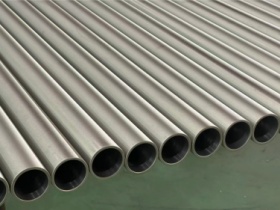
For many pipe projects, the core question is not strength first but corrosion mechanism first. Austenitic stainless steels resist general corrosion well, but localized corrosion behavior changes significantly with alloy chemistry. Published guidance from Outokumpu notes that resistance to pitting and crevice corrosion is determined mainly by chromium, molybdenum, and nitrogen content. Their data also shows that higher-alloyed austenitic grades such as 317L, 904L, and especially 6Mo grades outperform 316L in critical pitting and crevice resistance.
A separate but equally important issue is chloride stress corrosion cracking. Standard austenitic grades such as 304L and 316L can become sensitive to chloride SCC at elevated temperatures, and industry guidance repeatedly places concern around warm chloride-bearing service, often above about 50 to 60 degrees Celsius depending on the environment and stress state. That does not mean these grades always fail in chloride service, but it does mean that temperature, residual stress, and concentration effects must be taken seriously. If your pipe system runs hot, sees chlorides, and includes welded or highly stressed areas, the material conversation needs to move beyond a simple 304L versus 316L comparison.
Many buyers focus on corrosion first and overlook high-temperature behavior. That is a mistake in furnace-connected lines, exhaust-related systems, thermal cycling units, and process equipment exposed to intermittent heating. Stabilized austenitic grades were developed for exactly these cases. Outokumpu identifies 321 as a titanium-stabilized grade with improved intergranular corrosion resistance across an extended temperature range, while 347 is a niobium-stabilized alternative with improved intergranular corrosion resistance and good mechanical properties at high temperatures. Their guidance also notes that 347 is particularly useful for intermittent heating in the range of 400 to 900 degrees Celsius.
For even more demanding heat service, published Therma guidance shows that 321H and 347H have resisted molten nitrate salts up to 570 degrees Celsius in concentrated solar power applications. The broader lesson is simple: if the line will live at elevated temperature, especially with thermal cycling, do not force a room-temperature aqueous corrosion grade into a heat-service role. Match the grade to the real thermal profile, not just the fluid description on the process sheet.
Selecting Austenitic Stainless Steel Pipes for harsh environments is ultimately an exercise in realism. The best material is not the grade with the strongest reputation or the highest alloy content on paper. It is the grade that matches the actual corrosion mechanism, operating temperature, fabrication route, and maintenance reality of the system you are building. In our own work, we have found that the most successful projects begin with careful condition mapping and honest discussion about risk points such as chlorides, hot service, stagnant sections, and welding quality. That is usually where the difference between a durable system and an expensive rework cycle begins. If you are currently reviewing grades, comparing 304L with 316L, or considering whether a stabilized or higher-alloyed austenitic option is necessary, it is worth taking one more step before finalizing the order. At Zhejiang Xintongda Special Steel Manufacturing Co., Ltd., we encourage buyers, engineers, and project teams to look beyond the nominal grade name and evaluate the whole service picture. For more technical information, product discussion, or help narrowing the right option for a specific operating condition, readers can contact Zhejiang Xintongda Special Steel Manufacturing Co., Ltd. for a more detailed conversation.
Sometimes yes, but not automatically. 304L is a strong all-purpose grade, yet chloride-bearing atmospheres and wet chloride service are among the main conditions that increase the risk of localized corrosion. Where exposure is persistent or temperatures rise, many projects move to 316L or beyond.
316L contains molybdenum and is widely used in process industries and other more aggressive environments where corrosion resistance demands are above average. It also keeps the low-carbon welding advantage that helps reduce sensitivity to intergranular corrosion after fabrication.
Consider 321 or 347 when the pipe system will see elevated temperature, intermittent heating, or service conditions where stabilization against intergranular corrosion is important. Published guidance places 347 especially well for intermittent heating in the 400 to 900 degrees Celsius range.


