close
Choose Your Site
Global
Social Media

Author: Site Editor Publish Time: 2026-01-26 Origin: Site


One wrong measurement can ruin a build. A tube may not seal, or it may not fit. Stainless steel tube sizes only work when we measure them right.
In this guide, we show how stainless steel tubing is measured. You will learn how to check OD, wall thickness, and ID. You will also learn how to record results for clean QA.
Good results start from the right tool choice. A digital caliper works well for small to mid diameters. It reads OD and ID fast on accessible tube ends. A micrometer gives higher accuracy for wall thickness checks. For in-service tubing, an ultrasonic gauge is a strong option. For large OD, a circumference tape is often easier than calipers. For length, a tape measure works, yet a laser meter helps long runs. Keep jaws clean, and remove burrs before any close reading. Dirty jaws add error and hide ovality.
Tool | Typical accuracy | Best measurement use |
Digital caliper | about ±0.01 mm | OD and ID on accessible ends |
Micrometer | about ±0.001 mm | precise wall thickness checks |
Ultrasonic thickness gauge | about ±0.01 mm | non-destructive wall checks |
Circumference tape | about ±0.5 mm | large OD where calipers struggle |
Laser distance meter | about ±0.5 mm | long length checks in the field |
Tip: Calibrate tools each shift, and record the tool ID.
OD is the first measurement for tubing. Place caliper jaws square to the tube surface. Keep light and even pressure on both jaws. Take at least four readings around the tube. This check reveals ovality and dents from handling. If values vary, record the maximum and minimum. Repeat readings after rotating the tube on a flat table. Use the average only if your spec allows it. For large tubing, wrap a circumference tape around the tube. Then compute OD as C divided by pi. Avoid measuring directly on a weld seam. Seams can sit proud and skew readings.
Wall thickness defines strength, pressure margin, and bend behavior. If you can access a cut end, a micrometer is best. Clamp the wall between anvil and spindle gently. Too much force can crush thin wall tubing. For installed tubing, use an ultrasonic gauge instead. Clean the surface before you apply couplant gel. Then measure at several positions around the tube. This catches wall variation from forming and welding. If you only have OD and ID, you can calculate wall thickness: WT = (OD − ID) ÷ 2. Also measure near both ends, since trimming can change the wall.
Note: Thin-wall tubing deforms easily, so keep tool pressure very light.
Most drawings do not call out ID for tubing. Still, ID drives flow area, velocity, and pressure drop. After you measure OD and wall, calculate ID: ID = OD − 2 × WT. Then compare it to the design need. A small ID loss can raise pressure drop and energy cost. It can also block tube inserts, liners, or sensors. Two tubes can share the same OD and still differ in ID. Wall choice is usually the reason for that gap. If ID is tight, move up in OD. Or choose a wall that meets pressure and keeps flow acceptable.
Length errors cause fit-up stress and leak risk. Measure overall length end to end on a straight axis. For long pieces, mark segments and sum them: L = l1 + l2 + … + ln. This helps when access is limited in the field. Check end squareness, since angled cuts change effective length. Also check end prep, like bevel or plain ends. Poor end prep changes root gap and alignment during welding. For long runs, a laser meter reduces sag errors from tape measures. It also speeds work when crews measure overhead.
A measurement only helps when you record it well. Write OD, wall thickness, and units on the same line. Add tool type and calibration date for traceability. Record ambient temperature if the shop is very hot or cold. Thermal expansion can shift readings on long parts. Note the tube type, like seamless or welded. Record positions, like 0°, 90°, 180°, and 270°. This makes later checks consistent and fair. Photos of the gauge display help resolve disputes later. A simple template reduces disputes between buyers and suppliers.
Inspection record field | What to record | Why it matters |
OD readings | four angles plus min and max | confirms ovality and handling damage |
Wall readings | three to five points | catches wall variation across the batch |
Units | mm or inch, not both | prevents conversion mistakes |
Tool and calibration | tool ID and date | supports repeatable QA decisions |
Acceptance limit | tolerance and standard | speeds pass or fail decisions |
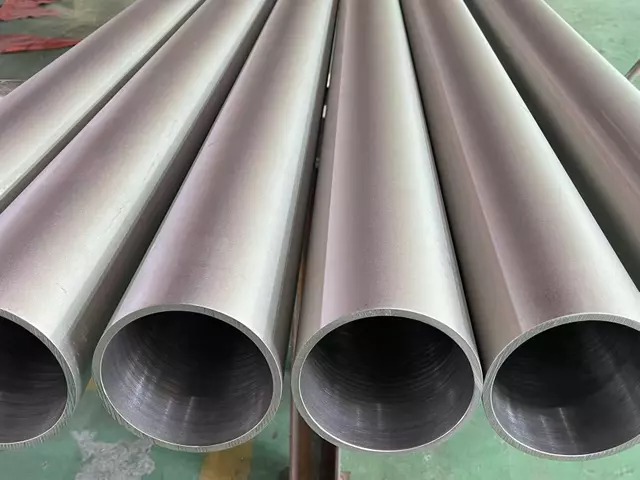
Tubing uses true outside diameter as the main size reference. If the tube is 1.25 inches OD, it is truly 1.25 inches. This is why stainless steel tube sizes feel direct and practical. OD controls how the tube mates to fittings and clamps. It also controls bend tooling, supports, and routing space. It also sets clearance for insulation, guards, and nearby instruments. When OD is wrong, nothing else saves the assembly. Measure OD first, then confirm it matches the drawing callout. If the system uses metric sizing, keep everything in millimeters. Mixed units cause shop confusion and scrap.
Wall thickness controls stress, stiffness, and service life. It affects burst pressure and fatigue life under vibration. It also affects weld heat input and weld time. Thicker walls take more heat and cool more slowly. They can shrink more during cooling and pull joints off line. Thin walls weld fast, yet they can burn through. For pressure service, wall thickness is a safety variable. For corrosion, it can be a life variable as well. Many teams add corrosion allowance through extra wall thickness. That choice should still respect flow needs and bending limits.
Most tubing callouts use OD × wall thickness on one line. You might see 25 mm × 1.5 mm, or 1.000 in × 0.065 in. Some thin walls use gauge numbers like BWG or US gauge. Lower gauge often means thicker metal in common charts. Gauge is fast for shops, yet it can confuse buyers. Convert gauge to real thickness in every RFQ. Also include length, grade, and standard in the same line. This single-line spec keeps stainless steel tube sizes clear. It also prevents suppliers from guessing your intent.
This difference causes many wrong orders. Tubing uses actual OD and wall thickness. Pipe often uses nominal pipe size and schedule. A 1 1/4 inch tube is a true 1.25 inch OD. A 1 1/4 inch pipe has a larger OD, near 1.625 inches. This surprises new buyers and junior engineers. It also breaks fit between tube fittings and pipe fittings. When you measure, confirm which product family you have. Check the drawing callout and the fitting style. Tubing often has tighter tolerances and smoother finishes. Pipe often targets heavier duty runs and different joining systems.
Schedule is a wall language tied to pipe standards. It is not a direct thickness unit by itself. The same schedule number changes thickness across diameters. There is no simple formula from schedule to wall thickness. You must use a chart from the correct standard. Some suppliers still quote schedule for tubing out of habit. It can work in some markets, yet it adds risk. If you see schedule on tubing, ask for numeric wall thickness. Then you can measure and accept it cleanly.
Note: If you see “SCH” on tubing, require a stated wall value.
Tolerance is the hidden part of measurement. Even small OD drift can cause leaks or loose joints. Sanitary clamps need consistent OD for seal compression. Orbital welding needs consistent OD for clean alignment. Automation also needs steady geometry for repeatable outcomes. This is why buyers request OD tolerance on critical lines. It also explains multi-point OD measurement around the tube. Ovality can sit inside an OD tolerance band. It can still cause fit issues at seals and ferrules. If you see fit problems, check ovality before you blame the supplier. It is often the fastest root cause to confirm.
Wall tolerance changes pressure margin across a batch. It also changes ID and flow area. Typical wall tolerance may range from ±7.5% to ±15% (needs verification). Welding and bending can change wall locally too. Bends can thin the outer radius and thicken the inner radius. For risk control, measure wall near bends and near tube ends. Also consider surface condition for ultrasonic checks. Rough or corroded surfaces can distort readings. Calibrate the gauge on a reference sample of known thickness. This keeps stainless steel tube sizes aligned across production lots.
Tip: Measure wall at several angles, and keep the lowest value.
Seamless tubing has no weld seam, so it is often uniform. Measurement still matters, especially for pressure service. Welded tubing has a seam line and a heat affected zone. Seam height can bias OD readings if you measure on it. Always measure OD away from the seam. Then measure wall at several angles to check uniformity. For critical lines, add non-destructive testing on the seam. This reduces risk from seam defects and local thinning. If seam drift appears, stop sampling and inspect the full lot. Record seam position in your inspection notes. It helps troubleshooting across different heats and batches.
Square and rectangular tubing uses width, height, and wall thickness. You need multiple readings on each face for good accuracy. Corners can vary due to forming and welding. Measure wall on the flat face, not at corners. Corners are often thicker and can mislead your check. Also check squareness and twist along the length. These errors affect fit in frames, rails, and skids. If you plan tight assemblies, request tighter tolerances early. Record which face you measured each time, so they can repeat it later. This habit improves consistency across inspectors and shifts.
A clear RFQ line avoids most disputes. Keep it one line per item and keep units consistent. Start with OD × wall × length in one unit system. Then add grade, standard, and finish requirements. Add tolerances when fit is critical. Add tests when service risk is high. This structure works for prototypes and production runs. It also makes quotes easier to compare side by side. Ask for a mill test report and a dimensional report per heat. When suppliers respond, ask them to restate OD and wall in plain numbers. This confirms they understood your stainless steel tube sizes for the job.
RFQ field | Example entry | What it prevents |
Size callout | 25 mm × 1.5 mm × 6 m | avoids OD and wall confusion |
Unit system | metric only | prevents conversion errors |
Grade | 316L or 304 | aligns corrosion and hygiene needs |
Standard | ASTM A269 (needs verification) | aligns tolerance and test scope |
Finish | mill or polished | aligns cleanability and appearance |
Tolerance | OD and wall limits | reduces fit-up rework |
Tests | PMI or UT as needed | reduces material and seam risk |
When a tube does not fit, start from OD. Check ovality and dents from shipping and handling. Then confirm the drawing calls tubing, not pipe. Next, verify wall thickness and the derived ID. Keep units single, either inch or metric. Check end squareness and end prep last. A clean log helps you isolate the root cause fast. It also supports quick supplier feedback and faster corrective action. If the issue repeats, tighten tolerances and increase sampling. They will usually solve the problem before the next build.
Stainless steel tubing is measured by true OD and wall thickness. ID comes from OD minus two walls. Multi-point checks reveal ovality and wall variation. Clean records keep QA and sourcing aligned.
For critical builds, Zhejiang Xintongda Special Steel Manufacturing Co., Ltd. supplies stainless tubing and seamless tube products. They support wide OD and wall ranges, plus custom lengths. Their certified quality and responsive service help you match real fit, sealing, and performance needs.
A: Measure true OD first, then wall thickness, then calculate ID using ID = OD − 2×WT.
A: Stainless steel tube sizes use true OD for precise fit, while NPS is a pipe naming system.
A: Use calipers for OD, a micrometer for wall, and an ultrasonic gauge for non-destructive wall checks.
A: Check OD and ovality at several angles, then verify wall thickness and confirm units.
A: Yes, wall thickness changes ID, strength, and pressure margin, so it affects flow and fit.