close
Choose Your Site
Global
Social Media

Author: Site Editor Publish Time: 2026-01-19 Origin: Site


Stainless steel pipe sizing sounds simple. Then NPS and schedule change everything.
So, what sizes does stainless steel pipe come in? In this guide, we decode NPS, OD, and wall thickness. You will learn how to pick sizes for flow and pressure. You will also write a clear RFQ spec.
Stainless steel pipe usually uses Nominal Pipe Size, or NPS, as its main size label. NPS looks like a real diameter, but in practice it is only a naming system that helps people match pipe, fittings, and supports across different suppliers. For most size ranges, the outside diameter stays fixed for a given NPS, even if the wall thickness changes. This is why a “2-inch pipe” does not actually measure two inches on the outside.
The true physical dimension that matters for installation is the outer diameter, or OD. OD controls how the pipe fits into flanges, elbows, clamps, and supports. Because of this, engineers often treat OD as the “real” dimension, while NPS acts as the label used in drawings and purchasing systems. Once you understand this difference, many sizing questions become much easier to answer.
Term | What it means in practice | Why buyers should care |
NPS | The naming label for pipe size | It keeps parts compatible across vendors |
OD | The true outside diameter | It controls fit, clearance, and supports |
WT | Wall thickness in mm or inches | It drives strength, weight, and welding effort |
ID | Inside diameter after wall thickness | It drives flow, velocity, and pressure drop |
Schedule | A wall thickness family code | It speeds selection and quote comparison |
Schedule is a code that represents a family of wall thicknesses. It is not a unit like millimeters or inches, and its real value changes with pipe size. In general, a higher schedule number means a thicker wall, which increases pressure resistance and mechanical strength. However, thicker walls also increase weight and fabrication effort.
Wall thickness also changes the inside diameter, or ID, of the pipe. For a given NPS, the OD usually stays the same, so when the wall gets thicker, the bore gets smaller. This reduces flow area and can increase velocity and pressure drop. Because of this, schedule selection always affects both strength and hydraulic performance, not just one or the other.
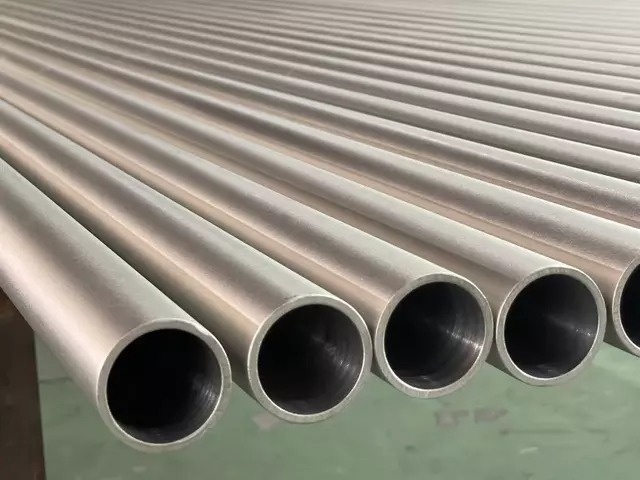
Every good sizing decision starts from service conditions. Pressure, temperature, and fluid chemistry define the main risks in the system. They also influence material grade choice and corrosion allowance. If any of these inputs change, the final pipe size and wall thickness may also change.
In real projects, we also consider vibration, thermal cycling, and mechanical abuse. These factors affect fatigue life and support spacing. For corrosive services, designers often add extra wall thickness as corrosion allowance to protect long-term integrity. This approach keeps stainless steel pipe reliable across its full design life.
After defining service conditions, the next step is to look at flow rate and velocity targets. In many systems, lower velocity helps reduce erosion, noise, and long-term operating cost. High velocity can increase pressure drop and pump power demand, which means higher energy cost every year.
A practical approach is to pick a first-pass diameter that keeps velocity in a reasonable range for the service. Then this bore requirement is converted into an NPS candidate. This method helps avoid one of the most common mistakes in piping design, which is choosing a diameter that is too small at the very beginning.
Once you have one or two candidate NPS sizes, the next step is to check OD charts. This step is critical for layout and installation. OD controls clearance to cable trays, steel structures, insulation, and supports, so it must fit the real space available.
If space is tight, OD often becomes the fixed limit. In that case, the designer may need to adjust the schedule to preserve enough ID for flow. If the ID becomes too small, the only real solution is to increase NPS. This simple loop keeps size decisions practical and easy to explain in reviews.
After NPS selection, schedule is chosen mainly based on pressure, temperature, and corrosion risk. Higher schedule means thicker wall, higher strength, and higher safety margin, but it also means more weight and more welding work. Because of this, thicker is not always better.
Once a schedule is selected, the final ID must be checked again against flow requirements. If velocity becomes too high, the designer may need to increase NPS. If weight or cost becomes a problem, the schedule choice may need to be revisited. This balance keeps stainless steel piping both safe and economical.
A complete purchase specification prevents most misunderstandings during procurement. It should always include size, wall, length, material grade, and standard. In many projects, it should also include end condition, tolerances, and required testing.
When this information is clear, suppliers can quote faster and more accurately. It also makes inspection at receiving much easier, because QA can directly compare the delivered pipe against the purchase order. This simple discipline improves the whole buying process.
Tip: Always write “NPS + schedule (or WT) + length + grade + standard” in every RFQ line.
Small stainless steel pipe often starts around 1/8 NPS and is widely used for instrumentation and compact process skids. Medium sizes are the real workhorses of most plants and buildings, supporting utilities, drains, and many process headers. In these ranges, availability is usually good and lead times are manageable.
However, small sizes also create a common ordering trap. Many teams confuse pipe sizing and tube sizing. Pipe uses NPS and schedule, while tubing uses true OD and wall thickness. If this is not checked early, fittings may not match when the material arrives on site.
Large stainless steel pipe can reach 24 inches and even larger in some industries. At these diameters, welded or EFW products become more common, while seamless options may be limited by mill capability and material grade. Because of this, availability checks should happen before the design is frozen.
Large sizes also bring logistics challenges. Transport limits, lifting plans, and storage space can all influence maximum length and packaging. In addition, tolerance and roundness become more critical, so many projects add stricter inspection and dimensional control requirements.
In stainless steel piping, buyers often see schedules like 5S, 10S, 40S, and 80S. These cover a wide range of industrial services. Thinner schedules usually suit lower pressure and lighter mechanical loads, while thicker schedules suit higher pressure or rough handling conditions.
You may also see older terms like STD, XS, and XXS. These represent traditional wall families, but the actual thickness still depends on NPS. Because of this, engineers usually check a chart or specify wall thickness directly when accuracy matters.
Thicker walls increase pressure margin and resistance to damage, but they also reduce ID and increase weight. This can increase pump power needs and installation effort. Because of this, choosing the thickest possible wall is rarely the best solution.
For example, at the same NPS, Sch 80 is much thicker than Sch 40 (needs verification), which means less bore area but more strength. In many systems, a better solution is to increase NPS slightly and use a moderate schedule. This keeps both strength and flow in a good balance.
Decision goal | What to adjust first | What it changes fastest | What it costs you |
More pressure margin | Increase schedule | Wall thickness and strength | Weight and welding hours |
More flow capacity | Increase NPS | ID and velocity | Material and space |
Lower installed cost | Use moderate schedule | Welding time and handling | Less pressure margin |
Better corrosion life | Add allowance or upgrade grade | Life in harsh media | Material price and lead time |
Note: Schedule alone never guarantees pressure rating. Design codes still control final approval.
Pipe and tubing use different size languages. Pipe uses NPS and schedule, while tubing uses true OD and wall thickness. Because of this, a “one-inch tube” is not the same thing as a “one-inch pipe.” Their fittings also belong to different systems.
This difference matters in procurement and installation. To avoid mistakes, the size language in the drawing must match the product family in the bill of materials. This simple check prevents many expensive ordering errors.
Seamless stainless steel pipe is often used for high integrity or high temperature services. Welded and EFW pipe are often used for larger diameters where seamless production becomes difficult or expensive. Both forms follow different standards and inspection rules.
Many projects specify standards such as ASTM A312 for stainless steel pipe (needs verification). Markings like SMLS can indicate seamless products. Clear standard and inspection requirements help avoid disputes during receiving inspection.
Custom sizes are useful when standard charts do not fit project needs. Retrofit work often has fixed space and routing limits. Corrosive services may need extra wall thickness for long life. Some systems also face short pressure spikes that standard schedules cannot cover well.
Custom length can also reduce waste and cut weld count in modular construction. Tighter tolerances can support automated welding and repeatable fabrication. In many cases, custom stainless steel pipe reduces total installed cost, even if unit price is higher.
A custom order still needs a clear and complete specification. It should state OD or NPS, wall thickness, length, grade, and standard. It should also include end condition, tolerances, and testing scope.
Capable manufacturers can cover a wide range. For example, suppliers like Xintongda support OD from 6 to 1016 mm and wall thickness from 1 to 65 mm, plus contract-based cut lengths and multiple international standards. They also hold certifications such as PED, ISO 9001, ISO 14001, ISO 45001, AD2000, and others, which helps B2B buyers align procurement to global compliance needs.
Note: Lead time depends strongly on material grade, size, heat treatment, and testing requirements.
A clear RFQ checklist prevents most stainless steel pipe ordering problems. It also speeds up supplier responses and makes quotes easier to compare. The same structure works for standard and custom products.
By keeping the same fields across every line item, project teams reduce confusion and improve schedule reliability. QA teams also benefit because certificates and markings can be checked against a clear purchase order.
RFQ field | Example entry | Why it prevents trouble |
Size language | NPS 4 or OD 114.3 mm | It avoids NPS and OD mixups |
Wall | Sch 40S or WT 6.02 mm | It locks strength and ID |
Length | 6 m or cut 2.3 m | It avoids waste and fit issues |
Grade | 304, 316L, 2205, 904L | It aligns corrosion and temperature needs |
Standard | ASTM A312 (needs verification) | It sets tolerances and tests |
Ends | Plain, bevel, threaded | It matches joining method |
Tests | PMI, UT, hydro, NDT scope | It aligns inspection and acceptance |
Tolerances | OD and WT limits | It reduces fit-up rework |
The most common mistake is missing schedule or wall thickness. Another is mixing tube OD language into pipe orders. Some teams also forget to specify end preparation and tolerances, which creates rework and delays.
In simple terms, Sch 80 usually means a thicker wall than Sch 40 for the same NPS, and pipe size labels never equal the real measured diameter. If the service is critical, confirm grade, standard, and test requirements early.
Tip: Ask suppliers to restate OD, WT, and length clearly in their quotes.
Stainless steel pipe sizes use NPS and OD. Schedule sets wall thickness and changes ID. We choose sizes by pressure, flow, and corrosion risk. Clear specs reduce delays and rework.
For demanding projects, Zhejiang Xintongda Special Steel Manufacturing Co., Ltd. offers stainless seamless pipes and alloy options. They cover wide OD and WT ranges, plus custom lengths. Their certified quality and responsive support help buyers match real service needs.
A: Stainless steel pipe ranges from very small NPS to large industrial diameters, and the final bore depends on schedule and wall thickness.
A: For stainless steel pipe, start with NPS, then schedule (or wall thickness), and confirm OD and ID using a standard chart.
A: Stainless steel pipe in Sch 80 has a thicker wall than Sch 40 for the same NPS, so it handles more pressure but has a smaller ID.
A: Stainless steel pipe uses NPS and schedule, while tube uses true OD and wall, so match the drawing callout to the fitting system.
A: Yes, stainless steel pipe can be customized for OD, wall thickness, and length when standard sizes do not fit space, pressure, or corrosion needs.