
close
Choose Your Site
Global
Social Media


Ever wondered what makes seamless pipe different from regular pipes? The absence of seams is what sets them apart and gives them unmatched strength.
In this article, we will explore the meaning of seamless pipes, their manufacturing process, and why they are preferred in critical industries. You'll understand their advantages and applications across various sectors.
A seamless pipe is a type of pipe that is made from a single, solid piece of metal. The manufacturing process does not involve any welding or joining of separate pieces. Instead, a solid billet of metal is heated and then pierced or extruded to form a hollow tube. This hollow tube is then elongated and shaped to the desired dimensions.
Feature | Seamless Pipe | Welded Pipe |
Manufacturing Process | Made from a single piece of metal | Made by welding two metal pieces |
Strength | Higher, uniform structure | Weaker at the seam |
Pressure Resistance | Better resistance to high pressure | May fail at the seam under pressure |
Durability | Longer lifespan in harsh conditions | Shorter lifespan due to seam weakness |
Corrosion Resistance | Higher resistance to corrosion | Lower resistance, seam prone to rust |
The most significant feature of a seamless pipe is its uniform structure. Unlike welded pipes, which may have weak spots at the seams, seamless pipes have no joints, reducing the potential for structural weaknesses and failures.
The absence of seams in seamless pipes contributes significantly to their strength and durability. Key features include:
● Uniform structure: The pipe is made from a single piece, ensuring even thickness and strength.
● Better pressure resistance: The seamless structure allows the pipe to withstand higher internal pressures without the risk of failure.
● Durability: Seamless pipes last longer under harsh conditions, as there are no potential weak points in the pipe’s structure.
These features make seamless pipes ideal for use in industries and applications where reliability and strength are critical.
Seamless pipes are typically made from materials like:
Material Type | Description | Applications | Benefits |
Carbon Steel | A cost-effective option for many industries. | General industrial uses, pipelines. | Good strength, affordable. |
Stainless Steel | Contains chromium for corrosion resistance. | Chemical processing, food industries. | Excellent corrosion resistance. |
Alloy Steel | Enhanced with additional elements like molybdenum. | High-stress and high-temperature applications. | High strength, heat resistant. |
Each material type is selected based on the specific requirements of the application, such as pressure, temperature, and exposure to chemicals.
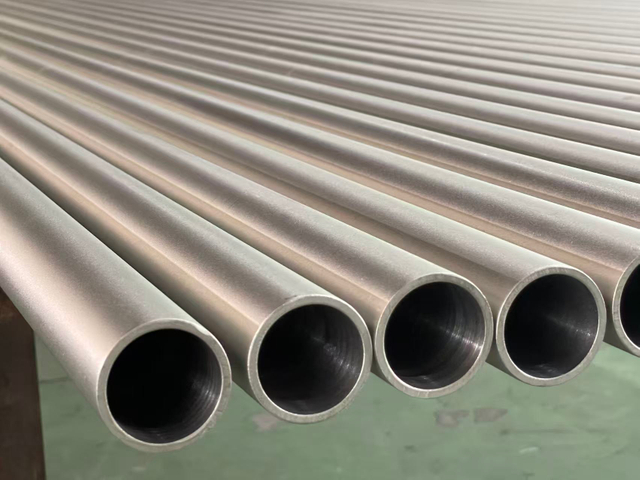
The production of seamless pipes is a complex and precise process that ensures the final product is of the highest quality. Several critical steps are involved in turning a solid billet of metal into a seamless pipe that can withstand high pressure and harsh conditions. Let’s take a closer look at these steps:
1. Heating the billet: The billet, typically a round piece of metal, is heated to a high temperature in a furnace. The heating process softens the billet, making it more malleable and easier to form into a pipe. The temperature to which the billet is heated depends on the material and the desired properties of the final pipe.
2. Piercing: Once the billet has reached the required temperature, it undergoes the piercing process. This is where a rotary piercing machine creates a hole in the center of the billet. The piercing process transforms the solid steel into a hollow tube. The quality of the piercing is essential for ensuring that the hollow tube is centered and free from any defects, which is critical for maintaining the uniformity and strength of the pipe.
3. Elongation: The hollow tube is then elongated using rotary skew rolls (known as the Mannesmann process) to increase its length and reduce its diameter.
4. Heat treatment and sizing: The pipe is heat-treated to improve its mechanical properties and then sized to meet the required specifications for diameter and thickness.
This process results in a pipe with a uniform structure, free from seams, and capable of handling high-pressure applications.
Welded pipes, in contrast, are made by rolling a flat piece of metal into a cylindrical shape and welding the edges together. This welded seam is the weakest point in the pipe, and over time, the stress and pressure can lead to the failure of the seam.
While welded pipes are easier and cheaper to produce, they do not offer the same level of strength or reliability as seamless pipes, especially in high-pressure applications.
The manufacturing process of seamless pipes ensures the pipe’s uniformity and structural integrity. The lack of seams means the pipe can withstand more extreme conditions and is less likely to fail under high pressure. Additionally, the ability to produce long lengths of seamless pipe without jointing or welding reduces the risk of leakages.
Tip: For applications requiring maximum strength and durability, seamless pipes are the best choice due to their uniform structure and ability to withstand high pressures.
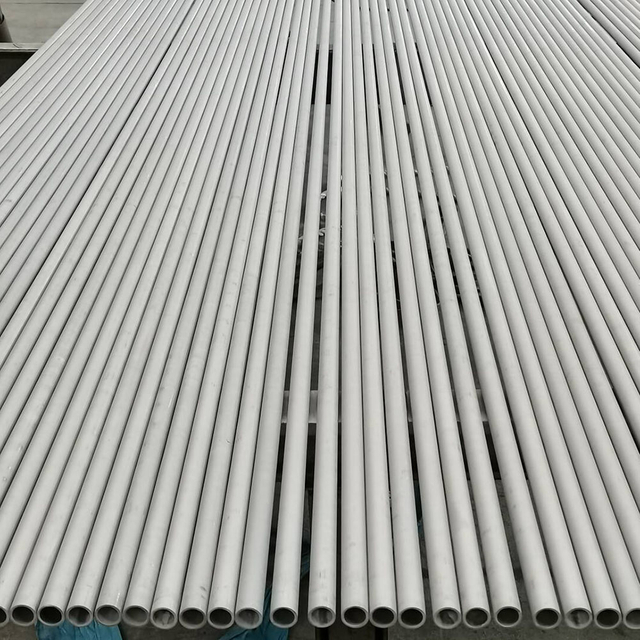
In the oil and gas industry, seamless pipes are essential for transporting oil, gas, and other fluids under high pressure. The pipes are used in deep-sea drilling rigs, offshore pipelines, and other critical systems where failure is not an option. The high pressure in these environments requires pipes that are robust and reliable, which is why seamless pipes are preferred.
The automotive and aerospace industries require parts that can withstand extreme conditions, such as high pressure, temperature fluctuations, and mechanical stress. Seamless pipes are used in manufacturing components like exhaust systems, fuel lines, and hydraulic systems, where strength and durability are key.
In construction, seamless pipes are used to build structural components such as support beams and columns. The pipes must be able to carry heavy loads and resist corrosion. Seamless pipes also play a vital role in heavy machinery where reliability and strength are crucial for the operation of complex equipment.
The primary advantage of seamless pipes is their strength. Because they are made from a single piece of metal, they do not have the weak points found in welded pipes. This makes them stronger and more durable, able to withstand extreme pressure, stress, and temperatures without failure.
The uniform structure of seamless pipes allows them to handle higher internal pressures compared to welded pipes. In critical applications like oil pipelines or pressure vessels, seamless pipes ensure a higher degree of safety by reducing the risk of rupture or leakages.
Seamless pipes made from materials like stainless steel offer superior corrosion resistance, especially in harsh environments like offshore drilling or chemical plants. This durability makes seamless pipes ideal for industries where environmental conditions can cause corrosion and wear over time.
The manufacturing process for seamless pipes is more complex and energy-intensive than that of welded pipes, making them more expensive. The need for specialized equipment and higher-quality materials contributes to the higher cost.
Although seamless pipes are available in various sizes, the production process can be more limiting in terms of pipe diameter and wall thickness. For some applications, welded pipes may be preferred due to their flexibility in size.
The production of seamless pipes requires more energy, particularly in the heating and elongation stages. Manufacturers are continuously working on improving energy efficiency to reduce both costs and environmental impact.
Tip: Despite the higher cost, seamless pipes offer long-term value in terms of performance and reliability, particularly for high-pressure and critical applications.
A seamless pipe is made from a single piece of metal, offering superior strength and durability. Its manufacturing process ensures a uniform structure, making it ideal for high-pressure applications. Zhejiang Xintongda Special Steel Manufacturing Co., Ltd. produces high-quality seamless pipes, providing reliable and long-lasting solutions for industries requiring strength and performance.
A: A seamless pipe is a type of pipe made from a single piece of metal, without any joints or welding. This structure provides superior strength and durability, making it ideal for high-pressure applications.
A: A seamless pipe is made by extruding or piercing a solid billet of metal, then elongating it to the desired size. The process ensures that the pipe has a uniform structure and no weak points.
A: Seamless pipes are stronger and more reliable because they don’t have weld seams, which can be weak points. They are better at handling high pressure and extreme conditions.
A: Yes, seamless pipes are generally more expensive due to the complex manufacturing process, but their higher strength and durability make them a better long-term investment for critical applications.


